La pervivencia, del per-vivire (“vivir a través de”), habla de lo que sigue con vida en el tiempo, pero transformado, adaptado. Una sobre-vida: algo que cambia de forma, pero sigue insistiendo.
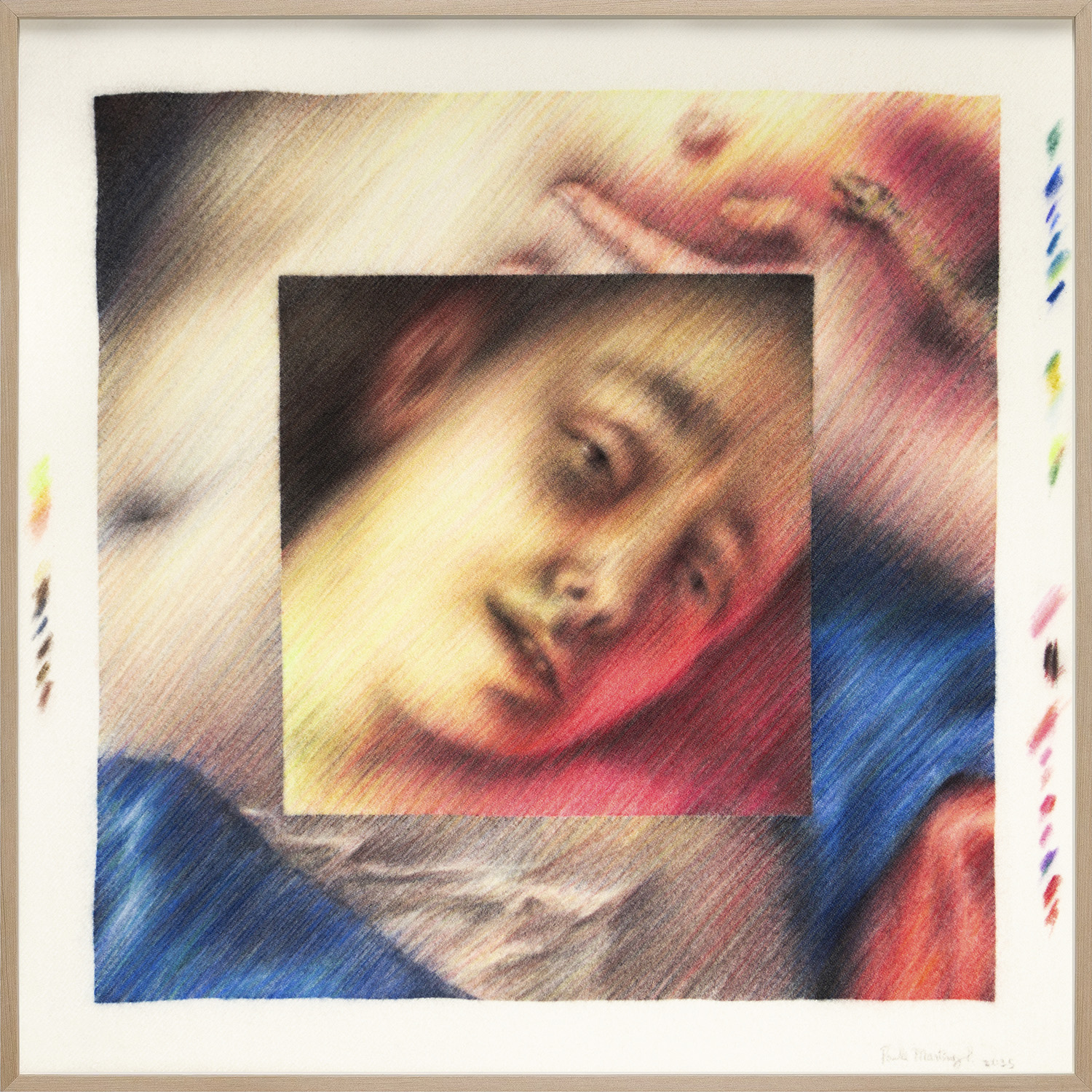
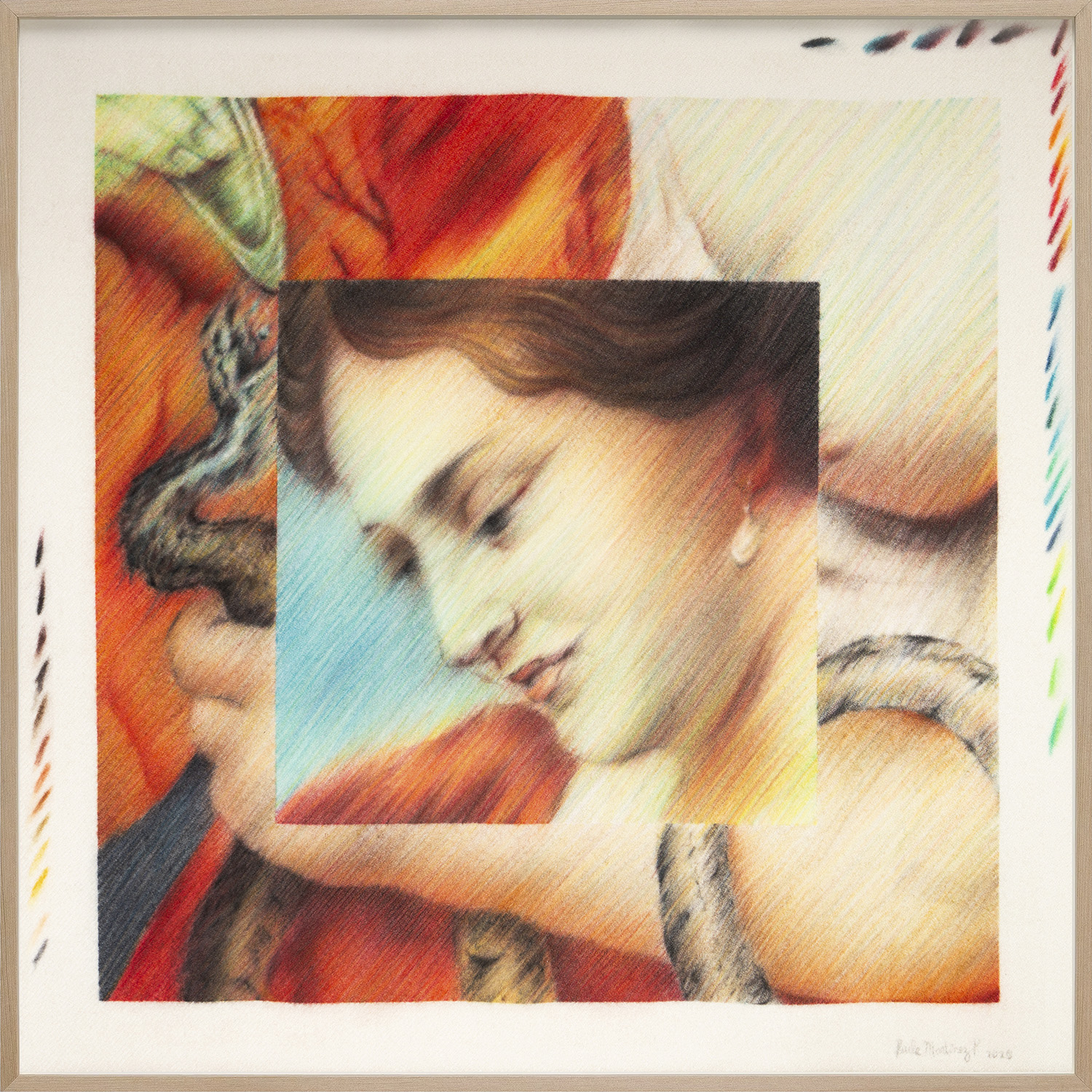
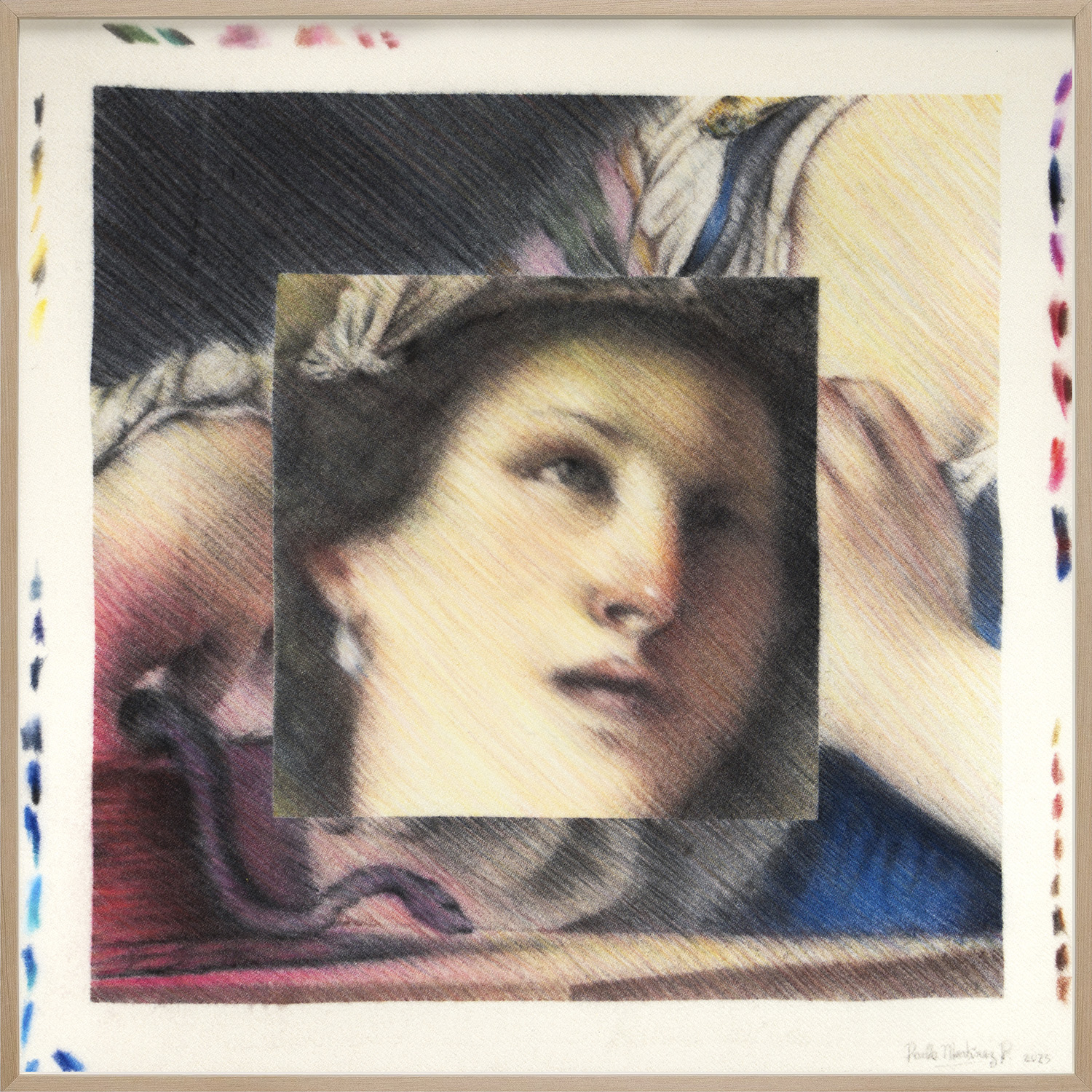
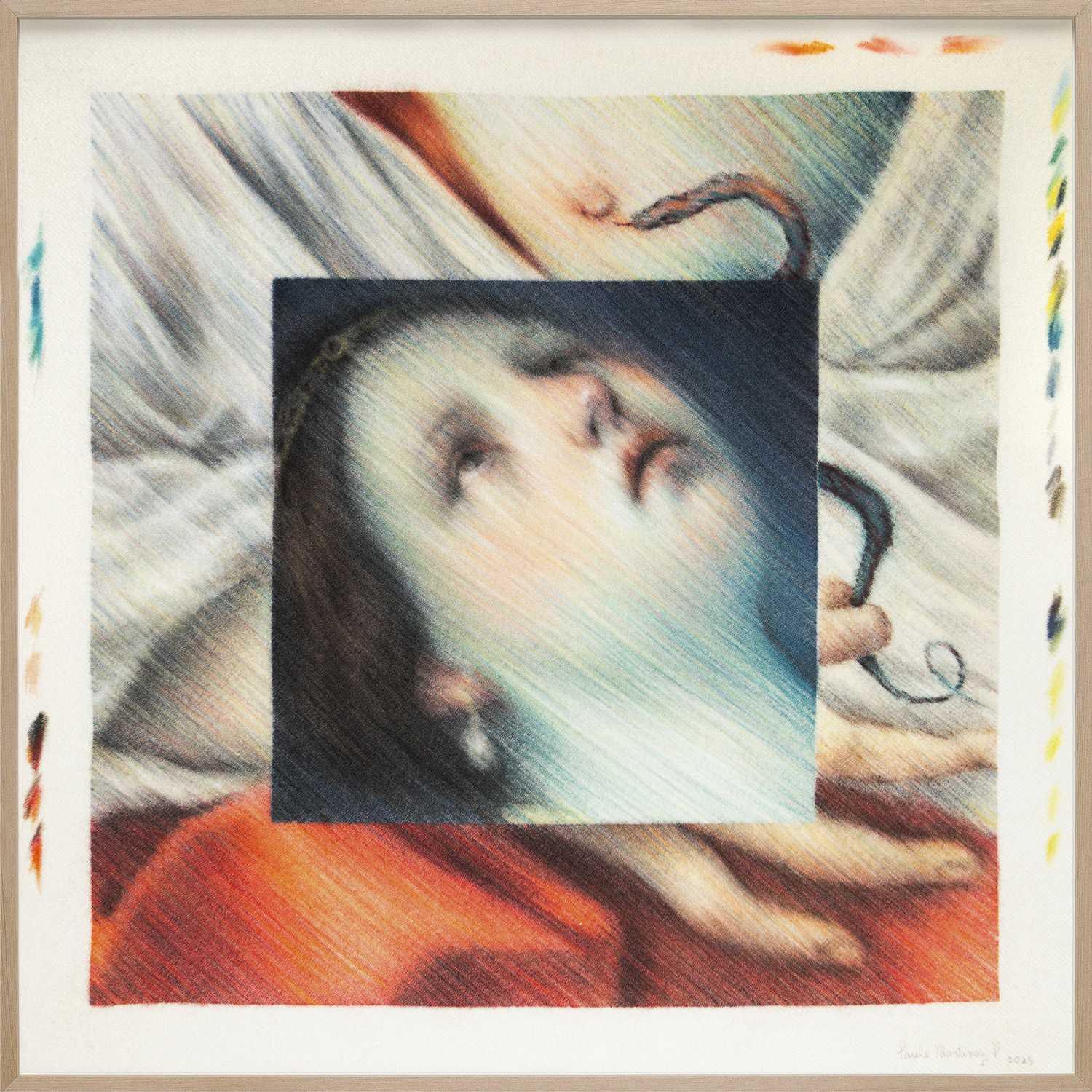
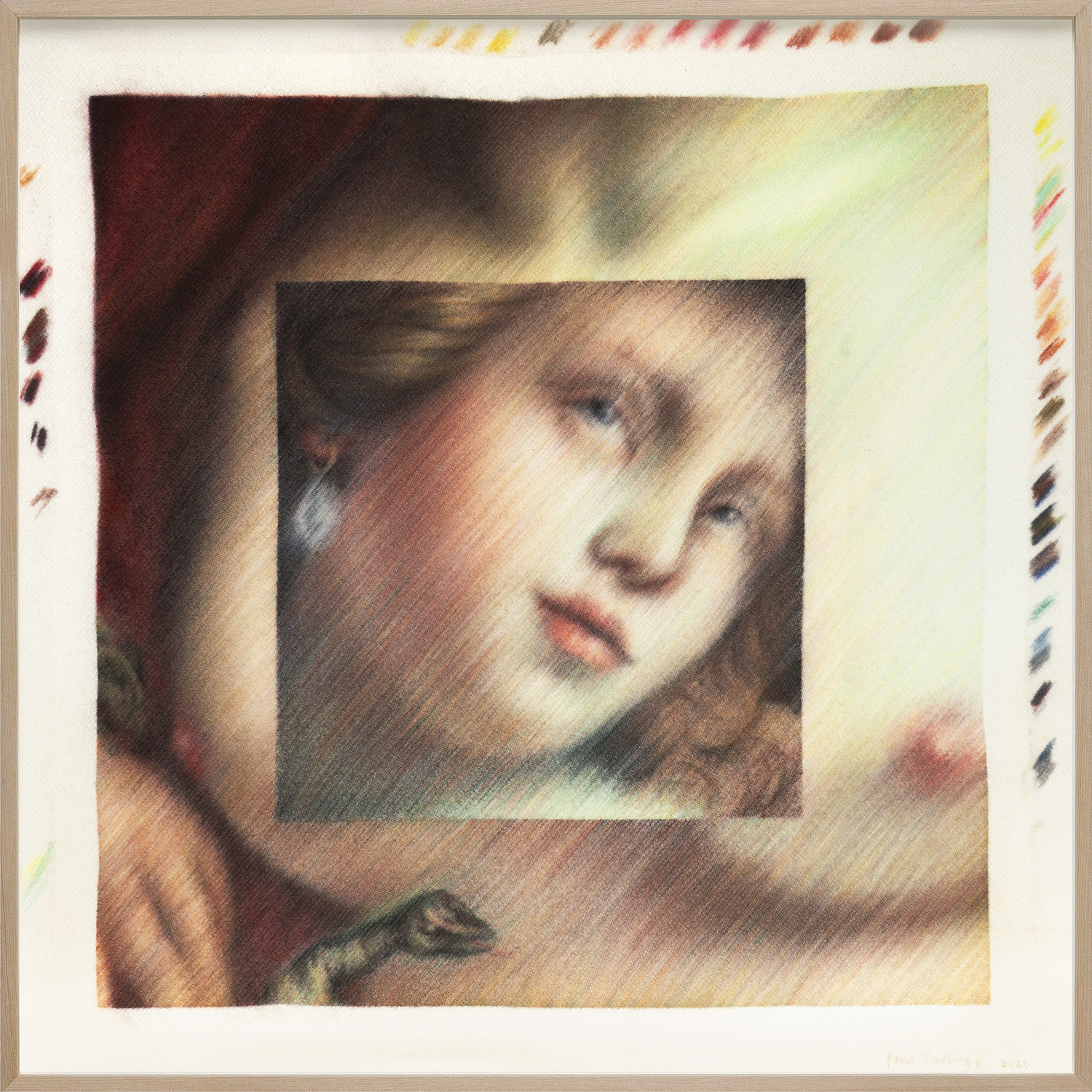
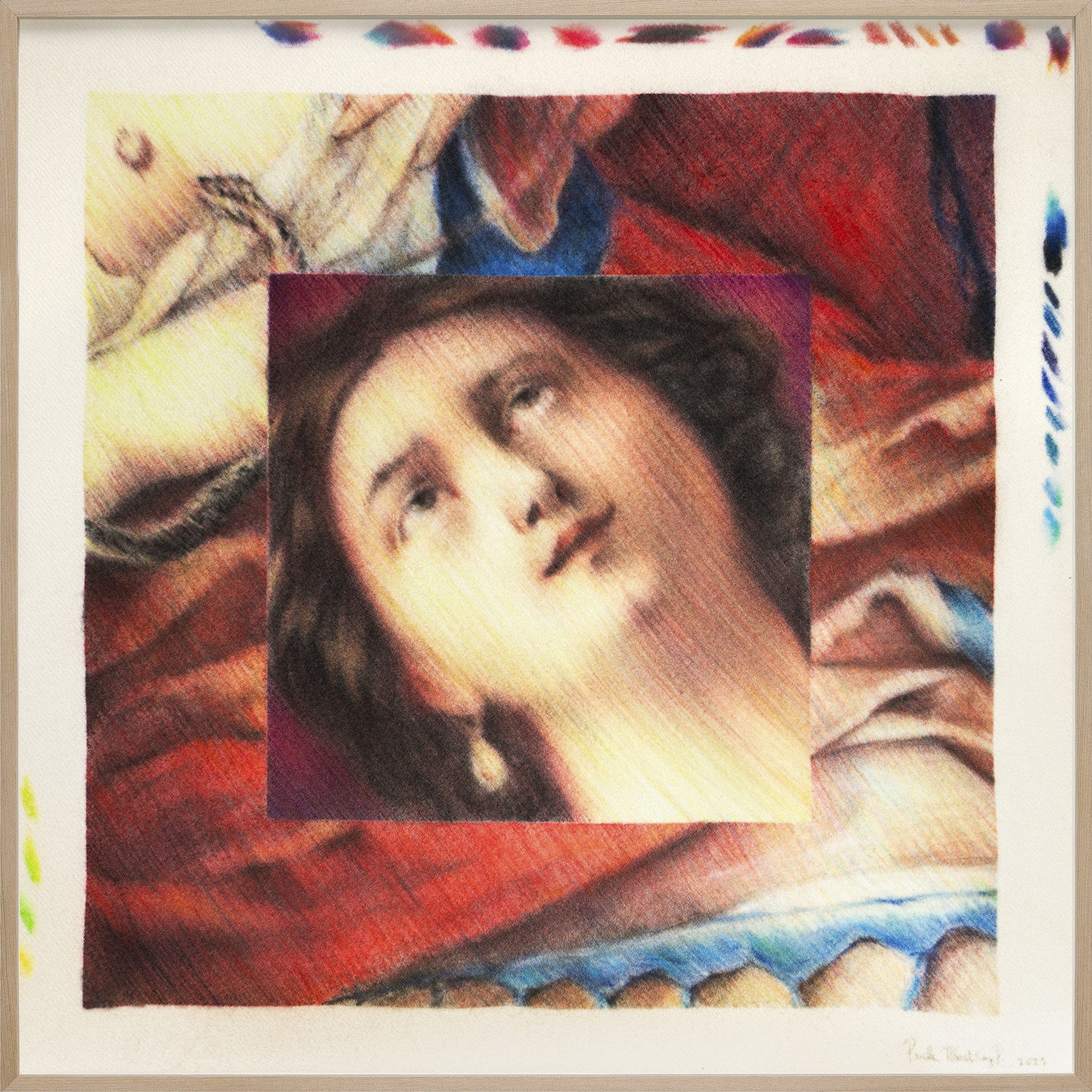
Paula Martínez presenta Cleopatra en trance, una serie de dibujos en pastel seco sobre lana que retoman la iconografía barroca del suicidio de Cleopatra. “¿Acaso las imágenes mueren? ¿O es que siempre fueron un recordatorio de lo que ya no está?”, se pregunta. “Como imágenes que tiemblan, construidas en movimiento. Un evento fugaz, difuso, superpuesto. Una alucinación (…) Quizás toda mi investigación sobre la supervivencia de Cleopatra podría reducirse a eso: el rostro ficticio que persiste precisamente porque nunca conocimos el original.”
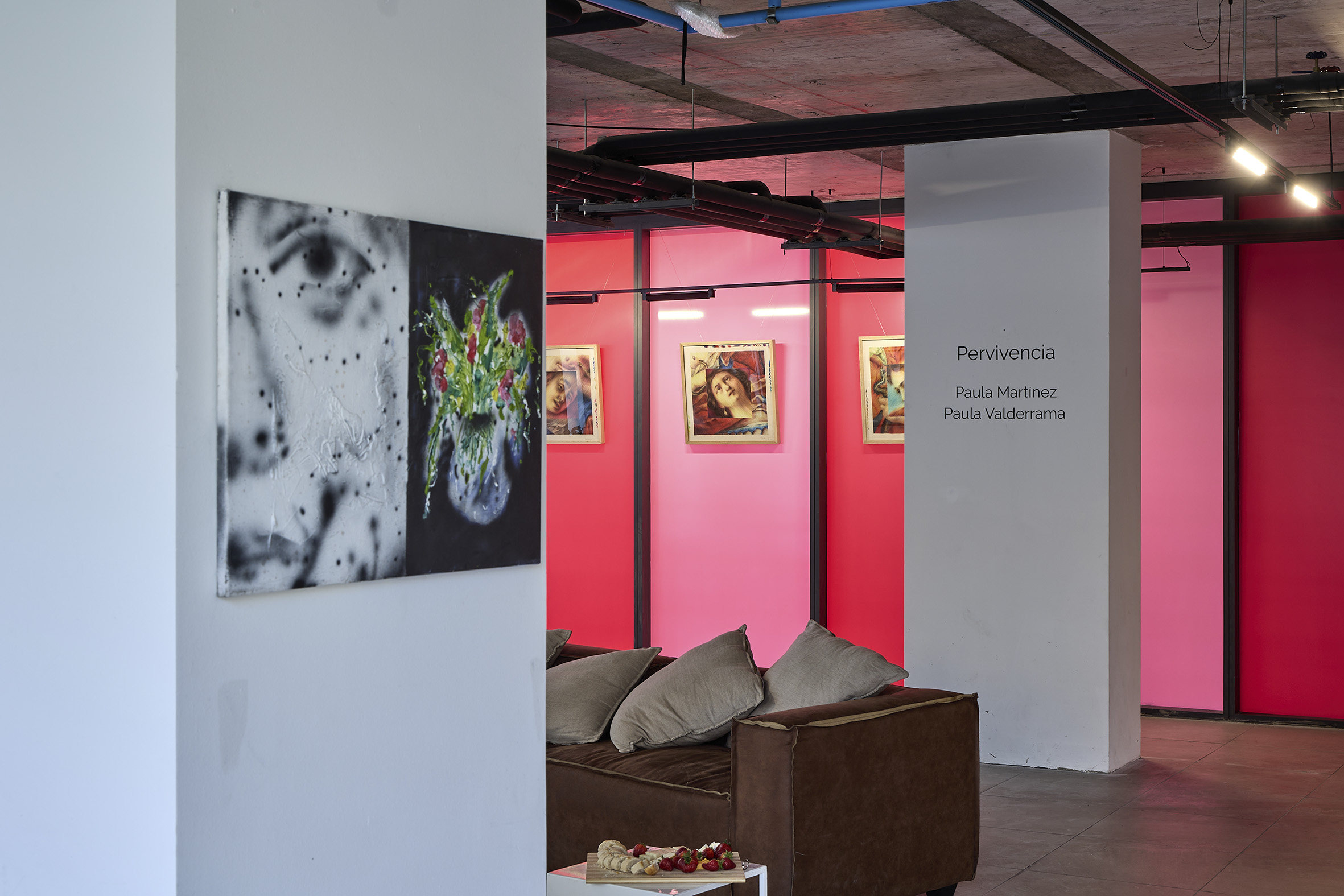
Paula Valderrama, en cambio, trabaja con fragmentos: close ups, siluetas, jarrones rotos, perritos, sombras, flores, proyecciones. Imágenes interrumpidas por otras, que emergen y se deshacen en capas. “Hay un punto en el cual algo deja de reconocerse con su origen, un punto más allá de lo frágil, en el cual no hay retorno”, escribe. Sus obras habitan ese tiempo intermedio donde lo que se rompe aún no es polvo, sino ruina, escombro, recuerdo que resiste antes de desaparecer.
Pervivencia, from per-vivire (“to live through”), speaks of what remains alive over time, transformed, adapted. A kind of after-life: something that changes shape yet refuses to disappear.
Paula Martínez presents Cleopatra in Trance, a series of soft pastel drawings on wool that revisit the Baroque iconography of Cleopatra’s suicide. “Do images ever truly die? Or were they always reminders of what is no longer there?” she asks. “Images that tremble, built in motion. A fleeting, blurred, overlapping event. A hallucination (…) Perhaps my entire research on the survival of Cleopatra could be reduced to this: a fictional face that persists precisely because we never knew the original.”
Paula Valderrama, by contrast, works with fragments: close-ups, silhouettes, broken vases, little dogs, shadows, flowers, projections. Images interrupted by others, emerging and dissolving in layers. “There is a point at which something no longer resembles its origin, a point beyond fragility, from which there is no return,” she writes. Her works inhabit that in-between time where what is broken is not yet dust, but ruin—debris, a memory resisting disappearance.